1. Home
  2. All Facilities
  3. Washington County Community Corrections

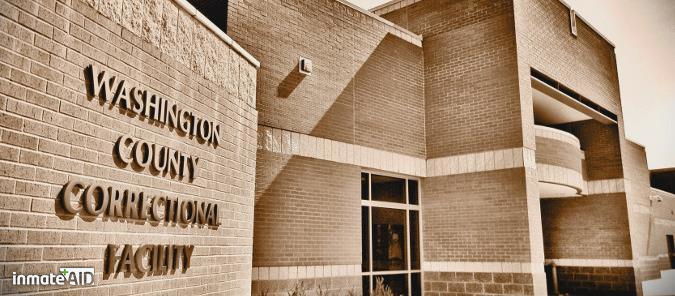
Washington County Community Corrections

State Probation and Parole

Last Updated: July 21, 2025
Address
260 SW Adams Ave, Hillsboro, OR 97123
Beds
215
County
Washington
Phone
503-846-3400
Fax
503-846-4509

Washington County Community Corrections is for State Probation and Parole offenders have not been sentenced yet and are detained here until their case is heard.

All prisons and jails have Security or Custody levels depending on the inmate’s classification, sentence, and criminal history. Please review the rules and regulations for Reentry facility.

If you are unsure of your inmate's location, you can search and locate your inmate by typing in their last name, first name or first initial, and/or the offender ID number to get their accurate information immediately Registered Offenders

Satellite View of Washington County Community Corrections
Search Arrest Records

If your loved one is at Washington County Community Corrections, InmateAid can help you stay connected. Call the facility directly at 503-846-3400 with any immediate questions.

Washington County Community Corrections serves an important role in keeping our community safe. We work to prevent the recurrence of crime among adult offenders by supervising them and connecting them with the resources they need to change problem behavior. We supervise approximately 3600 offenders using a range of evidence-based strategies, while working in partnership with the Courts, law enforcement, and the state Board of Parole and Post-Prison Supervision.

The following populations are served through the Center and/or Custodial Home Supervision:

  • Sentenced: Offenders are sentenced directly to the Center or Custodial Home Supervision or serve out the balance of a sentence that started at the jail. Sentenced offenders occupy approximately 60% of Center beds.
  • Sanctioned: Center beds and Custodial Home Supervision are used for short-term sanctions for probation and post-prison supervision offenders. They offer probation/parole officers a quick response to non-compliance, within a structured setting that provides programs to address problem behaviors. Sanctioned offenders occupy approximately 5% of Center beds.
  • Local Control (SB1145): There is an emphasis on substance abuse and cognitive programming with transitional release planning for:
    • newly sentenced felony offenders serving sentences of twelve months or less
    • revoked felony probation violators serving sentences of twelve months or less
    • parole and post-prison supervision offenders serving a sanction of 31 to 90 days
    • post-prison supervision offenders revoked up to 180 days

Local control offenders occupy approximately 26% of Center beds.

  • Transitional Lodgers: The Center offers 12 beds (6% of total beds) at the Community Corrections Center for indigent offenders until alternative housing is located. They must agree to abide by supervision conditions and Center rules to remain in the program. They will work, or actively pursue employment, while seeking other housing. Programs are offered to the Transitional Lodgers to assist with treatment needs or other conditions of their supervision.

Work Release & Alternative Sentencing

The Washington County Community Corrections Center (WCCCC) has also been known as the “Restitution Center (RC),” “Work Release Center”, and/or the "Community Corrections Center (CCC)."

Residents at the WCCCC are encouraged to obtain gainful employment while residing at the center. Once gainful employment has been made, the employment is verified with a documented schedule and pay stubs. Counselorsmaintain regular contact with the employer to discuss attendance and job performance.

GPS Home Monitoring

  • Is a community supervision program that is monitored by GPS tracking, drug screening, and appointments with their counselor or PO.
  • Is to be utilized for the Community Corrections Center population management, intermediate sanctions, and supervision in community prior to release.
  • To be eligible for GPS, residents must be in “good standing” with CCC rules and regulations and agree to abide by all court conditions and Center custodial release agreements.

EHD — Electronic Home Detention

EHD is a program offered by the Washington County Jail (WCJ) that offers home supervision by electronic means. Please contact the WCJ for further information on this alternative sentencing program.

  • The Community Corrections Center is a 215-bed custody facility
    that prepares people serving sentences to successfully transition back into
    the community. It offers a secure,structured living environment, while focusing
    on accountability, employment, treatment, and skill building.
  • The Probation and Parole Division supervises approximately 3600 offenders, holding them accountable to the conditions of their supervision while supporting their efforts to live successfully in the community.
  • The Counseling & Victims' Services (CVS) program provides counseling, advocacy, training, education and referral services that help liberate people from the effects of criminal harm, and encourages healthy relationships.
  • The Volunteer Program offers opportunities for work study, undergraduate and graduate internships. Additionally, free counseling services are offered through the Washington County Counseling Program.

Probation and Parole

The Probation and Parole Division supervises approximately 4100 offenders. The division is divided into specialized teams, each providing services to a specific population. There is specialized supervision for sex offenders, domestic violence offenders, substance abusers, offenders with serious and persistent mental illness, women, and Spanish speakers. This organizational structure allows the department to focus expertise and resources where they are needed most.

Supervision services assist in holding offenders accountable to the conditions of their supervision, while supporting their efforts to live successfully in the community. There is emphasis on engaging offenders in activities that, according to research, reduce criminal behavior. These include finding and retaining employment, actively participating in treatment and skill building programs, and developing a system of community supports that reinforces long-term stability.

In order to make efficient use of its resources, the Department has created three levels of supervision. Higher risk offenders receive Level I supervision which requires regular face-to-face contact and participation in treatment. Home visits and drug screening are done as necessary. Lower risk offenders may be assigned to Level II which, in most cases, requires only quarterly contact with the Probation and Parole Officer. To remain on Level II, an offender must be willing and able to abide by the conditions of supervision. The final level of supervision is called case bank. Case bank participants are not required to report to their Probation and Parole Officer. The officer instead monitors each offender’s progress through file reviews, looking at things like court accounting and treatment reports. An offender earns his or her way to case bank by complying with supervision conditions and staying out of trouble.

Inmate Locator

Finding an Inmate at Washington County Community Corrections

If you're trying to locate someone in custody at Washington County Community Corrections in Hillsboro, Oregon, the fastest path depends on how recently the arrest happened, what type of facility holds the inmate, and how quickly that facility updates its public records. There is no single nationwide inmate database that covers every detention facility in real time, so locating a specific person often means checking multiple sources or calling Washington County Community Corrections directly at 503-846-3400.

Using the InmateAid Inmate Search

The InmateAid inmate search is the fastest starting point for locating someone at Washington County Community Corrections. The search pulls from facility rosters, booking systems, and arrest record databases to return current custody status, charges, and housing facility. If the person was arrested or transferred recently and doesn't appear yet, the facility likely hasn't updated its public roster, which can lag by hours or a full business day. Try again later or call 503-846-3400 to confirm.

When the Inmate Doesn't Appear in the Search

Several explanations are possible if a person isn't showing up. The booking may not be complete. The person may have been released, transferred to another facility, or moved to federal or immigration custody. Some facilities deliberately delay public records by 24 to 72 hours for security reasons. Minors are never published in any public locator regardless of facility. To rule out a transfer or release, call 503-846-3400 and ask the booking desk to confirm current status.

What You'll Need to Search Effectively

Have ready: full legal name and any aliases, date of birth, and approximate date of arrest. If you know which agency made the arrest, that narrows results significantly. A booking number locates the record immediately. Without at least a full name and approximate date, searches return too many results to be useful.

Once You've Located the Inmate

When you confirm the person is at Washington County Community Corrections, set up a prepaid phone account so you don't miss the first call, and arrange any money transfer or commissary funding needed. For phone discount plans, money transfer, and mail services available at Washington County Community Corrections, see InmateAid's inmate services and call 503-846-3400.

To confirm current custody status, recent transfers, or release information at Washington County Community Corrections, call 503-846-3400.

Visitation Information

Visiting an Inmate at Washington County Community Corrections

Visiting someone held at Washington County Community Corrections in Hillsboro, Oregon starts with confirming the current visiting schedule, the visitor approval process, and your status on the approved visitor list. Visitation policies vary widely from one facility to another based on operating authority, security level, and the inmate's current status. Call Washington County Community Corrections directly at 503-846-3400 to confirm what applies right now.

Getting on the Approved Visitor List

Most detention facilities require visitors to be approved in advance. The inmate at Washington County Community Corrections typically submits a list of proposed visitors, and each adult on that list completes a visitor application form for a background check. Approval timelines range from a few days to several weeks depending on the facility. Do not travel for a visit until you have received confirmation. Call 503-846-3400 for the visitor application process and expected approval timeline.

Visiting Days, Hours, and Scheduling

Visiting schedules at Washington County Community Corrections depend on the facility's operating model. Some facilities offer walk-in visits during posted hours; others require advance scheduling through an online portal or phone reservation. Visiting days may differ by housing unit or classification. Holiday schedules often change without much notice. Call 503-846-3400 a day or two before your planned visit to confirm the slot is still open and the inmate is eligible for visits.

ID, Dress Code, and What to Bring

Bring a valid government-issued photo ID: driver's license, state ID, military ID, or passport. Most facilities require it to be unexpired and match the name on your approved application. Dress codes at Washington County Community Corrections are enforced at entry: no revealing attire, no clothing that resembles inmate or staff uniforms, no hats, and in many facilities no underwire bras. Leave phones, bags, electronics, keys, and wallets in your vehicle or in lobby lockers.

Inmate Status and Visit Eligibility

A visit can be denied for reasons unrelated to your paperwork: the inmate may be in disciplinary status, restricted housing, medical isolation, or holdover during a transfer. Facility-wide lockdowns also suspend visits without notice. If the inmate has recently arrived, been moved, or had any change in status, call 503-846-3400 before traveling. A phone call the morning of the visit can save a wasted trip.

Video Visitation

Many detention facilities now offer video visitation through providers such as Securus, GTL/ViaPath, HomeWAV, or Smart Communications, either alongside or in place of in-person visits. Video visits typically require setting up a paid account, scheduling in advance, and connecting from a smartphone, tablet, or computer. For information on inmate phone discount plans and money transfer services, see InmateAid's inmate services and call 503-846-3400 to confirm what's available at Washington County Community Corrections.

To confirm visiting hours, the visitor application process, or current eligibility at Washington County Community Corrections, call 503-846-3400.

Frequently Asked Questions About Washington County Community Corrections

State probation and parole programs provide supervision and structured reintegration for individuals serving sentences outside of incarceration. Probation is an alternative to jail or prison, allowing individuals to serve their sentence in the community under supervision, while parole is the conditional release of an inmate from prison before completing their sentence, subject to compliance with strict terms. Both are managed by state agencies to ensure public safety and offender accountability.

  1. What is the difference between probation and parole?
    Probation is a court-ordered alternative to incarceration, allowing an offender to serve their sentence in the community under supervision. Parole is the supervised release of an inmate from prison before the completion of their sentence, granted by a parole board based on good behavior and rehabilitation efforts.

  2. Who qualifies for state probation?
    Probation is typically granted to individuals convicted of lower-level offenses who meet court-established eligibility criteria. Judges consider factors such as criminal history, the nature of the offense, and the likelihood of rehabilitation.

  3. Who determines if an inmate is granted parole?
    A state parole board reviews an inmate’s conduct, rehabilitation progress, and risk to public safety before deciding whether to grant parole. Victim impact statements and recommendations from correctional officials may also influence the decision.

  4. What are the conditions of probation and parole?
    Conditions vary but often include regular meetings with a supervising officer, employment or education requirements, travel restrictions, drug testing, community service, and avoiding further legal trouble.

  5. What happens if someone violates probation or parole?
    Consequences depend on the severity of the violation. Minor infractions may result in warnings or increased supervision, while serious violations, such as committing a new crime, can lead to revocation and incarceration.

  6. Can someone on probation or parole leave the state?
    Travel restrictions apply, and individuals must obtain prior approval from their supervising officer before leaving the state. Unauthorized travel may be considered a violation.

  7. Are probation and parole officers the same?
    While their roles are similar, probation officers supervise individuals sentenced to community supervision instead of incarceration, while parole officers monitor individuals released from prison. Both enforce compliance with court or parole board conditions.

  8. Do probationers and parolees have to pay fees?
    Yes, most states require probationers and parolees to pay supervision fees, which may cover drug testing, electronic monitoring, or rehabilitation programs. Fees vary by state and financial hardship exemptions may be available.

  9. Can probation or parole be shortened or terminated early?
    Some individuals may qualify for early termination based on good behavior, compliance with conditions, and completion of required programs. Judges or parole boards determine eligibility.

  10. What types of rehabilitation programs are available for probationers and parolees?
    Many states offer substance abuse treatment, mental health counseling, vocational training, job placement assistance, and educational programs to support successful reintegration.

  11. What is an intensive supervision program (ISP)?
    Intensive Supervision Programs are stricter forms of probation or parole that require more frequent reporting, home visits, curfews, and electronic monitoring for high-risk individuals.

  12. Can someone on probation or parole vote?
    Voting rights vary by state. Some states allow individuals on probation or parole to vote, while others restore voting rights only after completing all sentence terms, including supervision.

  13. Is electronic monitoring required for all probationers and parolees?
    No, electronic monitoring is typically reserved for high-risk individuals or those under home detention, house arrest, or sex offender supervision.

  14. Can a probationer or parolee own a firearm?
    In most states, individuals on probation or parole are prohibited from possessing firearms. Violating this restriction can result in revocation and additional criminal charges.

  15. What support services are available for parolees after release?
    Many states provide reentry assistance, such as halfway houses, job training, housing support, and counseling services to help parolees transition successfully into society.

  16. How does a probation or parole officer monitor compliance?
    Officers conduct regular check-ins, home visits, drug tests, and employment verification, and may use GPS monitoring or curfews to ensure individuals comply with supervision conditions.


Ask The Inmate

Connect directly with former inmates and get your questions answered for free. Gain valuable insights from individuals with firsthand experience in the federal prison system, state and county jails, and GEO and CoreCivic-run private prisons. Whether you're seeking advice, clarification, or just curious about life behind bars, this unique opportunity allows you to ask questions or explore answers to previous inquiries from the InmateAid community. Engage in meaningful discussions and get informed perspectives from those who truly understand the system.