




October 22, 2015
WASHINGTON - Starting next year, many Americans won’t have to make the difficult choice between talking to family members in prison and paying their bills.
On Thursday, the Federal Communications Commission voted to cap the price that phone companies can charge for calls to and from prison inmates, which they say can run up to a staggering $14 per minute.
The 3-2 vote in Washington comes two years after the FCC voted to restrict rates on inmate calls made from one state to another. The new changes go further, capping rates on all local, in-state long distance, interstate and international calls. The vast majority of inmate calls will cost no more than $1.65 for 15 minutes, although slightly higher rates will be allowed in some smaller institutions. And fees and other costs, which in some cases have boosted calls to $17 to $25 for 15 minutes, also would be limited. The changes will take effect in prisons early next year and in jails by midyear.The Federal Communications Commission agreed Thursday to take additional steps to slash how much can be charged for phone calls made from jails and prisons.
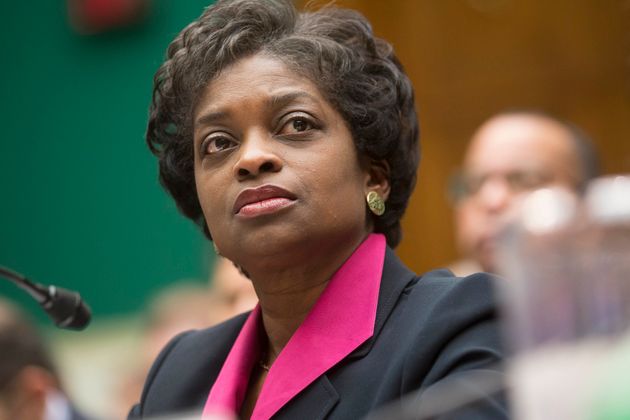
FCC Commissioner Mignon Clyburn praised the agency's approval of a new regulation on Thursday that will cap rates and fees for prison phone calls.
FCC commissioner Mignon Clyburn, a Democrat, said before the vote that the cost of the calls have placed "incredible burdens" on the families of the more than 2 million people incarcerated in the U.S.
Under the new rules, scheduled to go into effect in early 2016, most prison inmates will not be charged more than 11 cents per minute for any call. The rules will reduce call costs from $2.96 to $1.65 for a 15 minute in-state call, and from $3.15 to $1.65 for a 15-minute long-distance call. It will also curb the extra charges that can often tack on up to an extra 70 percent, according to the commission.
“The truth is that each of us is paying a heavy price for what is now a predatory, scaled market regime,” said Democratic FCC Commissioner Mignon Clyburn. “Not one of us here would ever consider paying $500 a month for a voice-only service where calls are dropped routinely for no reason.”
Over the years, defense attorneys also have joined in the fight for lower rates. But phone companies have defended the costs, saying some of the money generated is used for things like activities for the incarcerated and that the calls require costly security features. The FCC has countered that the cost of security features was built into the rate structure.
Commissioners Ajit Pai and Michael O'Rielly, both Republicans, dissented, saying they believed they didn't have the authority to take such action.
Jonathan Thompson, executive director of the National Sheriffs' Association, said the group is "very disappointed" and that "the record reflects that the costs sheriffs do have warrant a much higher rate."
"We believe also that inmates should have this capability to call, but unfortunately these new rates in all likelihood will mean that inmates will go without the ability to call and talk to their family members," he said. "How many, we don't know. But we know that many small facilities cannot afford to do this without cost recovery."

On Thursday, Oct. 22, 2015, the Federal Communications Commission voted to cap the price that phone companies can charge for calls to and from prison inmates, which they say can run up to a staggering $14 per minute.
The changes don't ban profit-sharing commissions that have benefited jail and prison operators and in some cases made calls costlier, although the amount of money coming in will likely be lower. Even before the vote, however, some states had voluntarily moved to reduce or ban the commissions.
The petition asking the FCC to regulate inmate phone call rates was filed in 2003 after a judge dismissed a lawsuit that Martha Wright-Reed of Washington brought against a private prison company. She had struggled to keep up with phone bills while her grandson was incarcerated. The judge directed her to the commission.
Wright has since died, but Commissioner Jessica Rosenworcel said "there is no better way to honor her legacy than to finally fix the criminal costs too many families face just to stay in touch."