1. Home
  2. All Facilities
  3. Delaney Hall Detention Facility (ICE) - GEO

Delaney Hall Detention Facility (ICE) - GEO

Private Facility

Last Updated: May 08, 2026
Address
451 Doremus Ave, Newark, NJ 07105
Beds
120
County
Essex
Phone
973-274-0115
Fax
973-817-8316
Email
info@cecintl.com

Delaney Hall is for Private Facility offenders have not been sentenced yet and are detained here until their case is heard.

All prisons and jails have Security or Custody levels depending on the inmate’s classification, sentence, and criminal history. Please review the rules and regulations for Medium facility.

The phone carrier is GettingOut.com, to see their rates and best-calling plans for your inmate to call you.

If you are seeking to send your inmate money for commissary, one recommended for this facility is AccessCorrections There is a fee for sending money, see their rates and limitations.

If you are unsure of your inmate's location, you can search and locate your inmate by typing in their last name, first name or first initial, and/or the offender ID number to get their accurate information immediately Registered Offenders

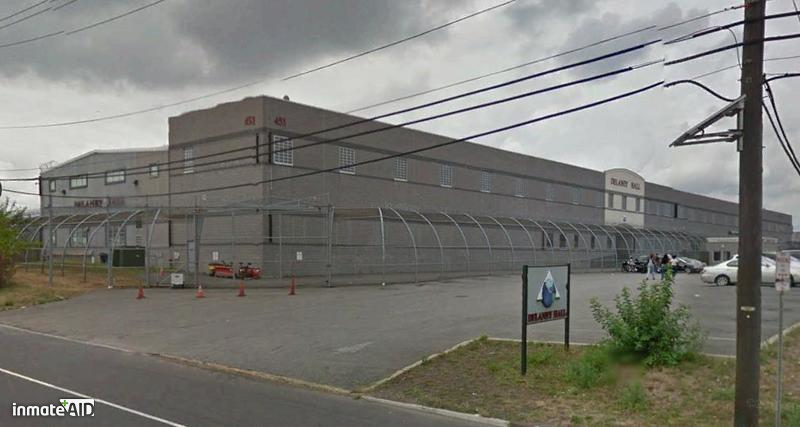
Satellite View of Delaney Hall Detention Facility (ICE) - GEO
Search Arrest Records

If your loved one is at Delaney Hall, InmateAid can help you stay connected. Call the facility directly at 973-274-0115 with any immediate questions.

Located in Newark, NJ, Delaney Hall operates as a private contractor with various government agency agreements providing state-minimum custody requirements. Programs are offered to all custody levels, including work release residents focused on reentry success. With a strong emphasis on rehabilitation, Delaney Hall provides comprehensive educational and vocational opportunities. Onsite amenities include dietary, health, fitness, educational, religious, and recreational services. Regular inspections ensure compliance with government standards, ensuring the facility's continued operation.

The Delaney Hall Detention Facility in Newark, New Jersey, is a large federal immigration detention center operated by GEO Group under contract with the Department of Homeland Security and U.S. Immigration and Customs Enforcement. Located near Newark Liberty International Airport and major interstate transportation corridors, the facility serves as a major detention and processing center for ICE operations throughout the Northeast. Delaney Hall primarily houses adult immigration detainees awaiting deportation proceedings, asylum hearings, immigration court appearances, or transfer to other federal facilities. Public detention records and GEO operational information identify the facility as having an approximate capacity of 1,000 beds, making it one of the largest ICE detention centers in the northeastern United States.

Originally developed as a federal detention and reentry facility, Delaney Hall has operated under several different correctional and detention functions over the years before becoming heavily integrated into the DHS immigration detention system. The facility contains secure housing units, intake and booking areas, attorney visitation sections, medical and mental health clinics, recreation spaces, food service operations, transportation staging areas, and administrative offices. GEO personnel oversee security operations, detainee supervision, healthcare coordination, food services, transportation logistics, and compliance with ICE detention standards. Because of its location within the densely populated New York-New Jersey metropolitan region, the facility plays an important role in processing immigration detainees arrested throughout New Jersey, New York, and surrounding states.

ICE Detainee Information

This facility holds immigration detainees under an active contract with U.S. Immigration and Customs Enforcement in addition to its regular population. ICE detainees are civil immigration detainees, not criminal defendants, and are held while their immigration cases are processed. The rules, rights, and services that apply to ICE detainees differ from those that apply to the general jail population.

To locate an ICE detainee at this facility, use the ICE Online Detainee Locator at locator.ice.gov. You will need the detainee's A-Number, a nine-digit Alien Registration Number that appears on any immigration document they have received. If the A-Number has fewer than nine digits, add zeros at the beginning. If you do not have the A-Number, you can search using the detainee's full legal name, country of birth, and date of birth. Names must be an exact match; try variations if the first search returns no results.

Immigration bond works differently from criminal bail. Not all detainees are eligible for bond; those with certain criminal convictions or prior deportation orders may be subject to mandatory detention. For those who are eligible, bond is set by an immigration judge and typically ranges from $1,500 to over $10,000. Bond must be paid in full before release. An immigration attorney can request a bond hearing and argue for a lower amount based on the detainee's circumstances.

Unlike criminal defendants, ICE detainees do not have the right to a government-appointed attorney. They must hire a private immigration attorney or find free legal help through a nonprofit organization. RAICES provides legal services and bond assistance at raicestexas.org. The National Immigrant Justice Center offers free legal representation at immigrantjustice.org. Many immigration courts also maintain a list of free and low-cost legal service providers available to detainees upon request.

ICE transfers detainees between facilities frequently and with little advance notice, sometimes to locations far from family and legal counsel. If you cannot locate your family member through this page, search the ICE Online Detainee Locator again at locator.ice.gov with their A-Number. If they have an attorney, notify the attorney immediately as transfers affect court appearances and case timelines.

The Delaney Hall Detention Facility has frequently been at the center of political and legal debate surrounding private immigration detention operations in New Jersey. Advocacy organizations, immigration attorneys, and civil rights groups have periodically raised concerns involving detainee conditions, medical care access, legal visitation rights, and prolonged detention issues. New Jersey lawmakers have also pursued legislative efforts aimed at limiting or prohibiting private immigration detention facilities within the state, leading to ongoing legal battles involving state authority and federal immigration enforcement powers. Despite continuing controversy, Delaney Hall remains a major component of the DHS detention network and continues housing hundreds of ICE detainees as they move through the federal immigration court and enforcement system.
Inmate Locator

To utilize the Inmate Search page on InmateAid, begin by selecting the relevant prison facility in New Jersey. This allows you to view the current list of inmates housed at Delaney Hall Detention Facility (ICE) - GEO.

The second section features the InmateAid Inmate Search tool, providing a user-generated database of inmates. You can access this resource to utilize any of InmateAid's services. If you require assistance in creating an inmate profile to maintain communication, please get in touch with us at aid@inmateaid.com, and we'll gladly help you locate your loved one.

For the fastest and most comprehensive inmate search, use the Arrest Record Search tool. Records are updated frequently and include booking data, charges, and current custody status across thousands of facilities nationwide.

Visitation Information

Visitation Information - Delaney Hall Detention Facility

Facility Contacts

ICE Supervisory Deportation Officer (Newark Outreach): Newark.Outreach@ice.dhs.gov Attorney visit phone: 973-474-2268 Attorney visit and legal mail email: 279attorneyvisit@geogroup.com ICE Talton tablet support: ICESupport@talton.com

Visiting Hours

Saturdays, Sundays, and holidays: 7:30 a.m. to 7 p.m. Tuesdays and Thursdays: 4 p.m. to 9 p.m.

A maximum of four people may visit at one time.

What You Can Bring In

You may bring a clear gallon-size bag containing only: a photo ID, car keys, change, unopened baby formula, unopened baby food, and diapers and wipes.

You must remove coats, jackets, and shoes for X-ray screening. The Front Lobby Officer will hand-search these items. Empty all pockets. Anything not allowed must be thrown away or returned to your vehicle.

Underwire undergarments are not allowed inside the facility.

Who Can Visit

Minors are allowed but must remain under the direct supervision of an adult visitor. Disruptive behavior by minors, accompanying adults, or detainees can result in the visit being terminated.

Visiting other detainees or their visitors during your visit is not allowed unless the Facility Administrator approves it in advance.

Dress Code

Female visitors age 12 and older: Skirts and dresses must extend to the knee while seated. Slits cannot rise higher than the knee while seated. No sheer or see-through clothing. No exposed breasts; tops cannot be cut lower than the underarm in the front or back. No bare midriffs, strapless tops, tube tops, or swimsuits. No tight clothing. T-shirts or other form-fitting tops without bras are not allowed. Shoes required at all times; no open-toe shoes. Shorts must cover the buttocks and crotch when standing and sitting; short shorts, jogging shorts, and cut-offs are prohibited. No pants with holes. No gang colors or gang displays.

Male visitors age 12 and older: Shirts required at all times. No muscle shirts, bare midriff shirts, or sleeveless shirts. Shoes required at all times; no open-toe shoes. No gang colors or gang displays.

Visiting Rules

No firearms or weapons of any kind. No electronic devices (cell phones, pagers, radios) in secure areas. Visitors cannot pass anything to detainees or carry items into the visitation area beyond the gallon bag described above.

Disruptive behavior by anyone in the visit will result in termination, and may result in future visits being denied.

Every visitor is subject to a pat-down, bag inspection, X-ray screening, and metal scan. Refusing a search means you will not be admitted. If you appear intoxicated, you will be turned away.

Attorney Visits

In-person attorney visits run Monday through Saturday, 8 a.m. to 7 p.m., and Sunday, 8 a.m. to 12 p.m.

Legal visits can be scheduled in advance through ERO eFile on a first-come basis, in 60-minute blocks. Walk-in visits are still permitted, but scheduled visits get priority.

A list of pro bono legal organizations is posted in every housing unit and updated quarterly. Detainees are responsible for contacting these organizations to schedule appointments.

Virtual Attorney Visits

Attorneys must request video teleconference (VTC) meetings or confidential legal phone calls through ERO eFile. Confirmation comes back through ERO eFile.

VTC sessions run Monday through Saturday, 8 a.m. to 6 p.m., in 60-minute blocks. Appointments can be booked up to 2 weeks ahead but no later than 24 hours before the slot, on a first-come basis. There is no cap on how many appointments an attorney can request, but no attorney can have more than one 60-minute meeting with the same detainee in a single day.

The ERO eFile request must include: the attorney's full name and contact info, the detainee's name and A-number (or name, date of birth, and country of birth), and the meeting ID, passcode, and platform (Zoom, WebEx, or Microsoft Teams) in the Virtual Meeting Information section. For phone-only calls, note that and provide the number the facility should call.

Required attachments: a scan of the attorney's government ID, proof of legal status (bar card, attorney license, paralegal license, or similar), and the eFiled G-28 unless this is a pre-representational visit. If a legal assistant is joining alone, attach a letter of authorization on firm letterhead and a scan of the assistant's ID.

For requests under PBNDS 2011 Section 5.7 (V.N.1) and Section 4.3 (V.FF), upload the written request in the Attorney Authorization Letter field and the Professional Licensure or Curriculum Vitae in the Medical/Mental Health Evaluators field.

Only legal representatives, legal assistants, and interpreters are allowed on these calls. No family, no friends. The attorney can use outside interpretation services during the session. Calls are confidential; an officer stays within sight but out of earshot and will knock 5 minutes before the cutoff.

The facility can cancel or reschedule appointments to manage safety risks or to make sure other attorneys and detainees get fair access. If no slots are available or you have an exigent circumstance, contact 279attorneyvisit@geogroup.com or 973-474-2268.

Tablet-Based Legal Calls and Video

This facility uses ICE Talton tablets, which support video visitation. Attorneys can register at GettingOut for a Friends and Family Account, then email ICESupport@talton.com with their email and phone number to make sure their communications are not recorded or monitored.

Legal Mail by Email

Attorneys can send legal correspondence to 279attorneyvisit@geogroup.com. Mark "Legal Mail" clearly in the subject line and attach the specific documents to be delivered.

Include a cover sheet with the detainee's full name, A-number, sender's return fax number, total page count, and a "Legal Mail" notation.

Documents are inspected for contraband but not read, then delivered to the detainee. Processing happens during business hours Monday through Friday, 8 a.m. to 4 p.m. EST, excluding holidays.

Consular Visits

Consular officials can meet with their nationals at any time. Make arrangements with the ICE Supervisory Deportation Officer at Newark.Outreach@ice.dhs.gov when possible, and bring credentials.

Clergy Visits

Clergy can visit at any time but must arrange the visit ahead of time through the Chaplain's Office.

Frequently Asked Questions About Delaney Hall Detention Facility (ICE) - GEO

  1. What is a private prison?
      A private prison is a correctional facility owned and operated by a private corporation under a contract with federal, state, or local governments. These facilities house inmates in exchange for a per-inmate daily fee, which the government pays to the company. Private prisons handle security, food, medical care, and rehabilitation programs, but their goal is to operate profitably, which has led to controversy over cost-cutting measures that may affect inmate welfare.

  2. How do private prisons differ from public prisons?
      Unlike state or federal prisons, which are directly operated by government agencies, private prisons function as for-profit businesses. While they must follow contracted guidelines, they often have different staffing policies, fewer rehabilitation programs, and more cost-cutting measures to increase profitability. Public prisons are held directly accountable to taxpayers and elected officials, whereas private prisons are accountable to shareholders and company executives.

  3. Who owns private prisons?
      The two largest private prison companies in the U.S. are:

    • CoreCivic (formerly Corrections Corporation of America - CCA)
    • The GEO Group
      These companies manage numerous facilities nationwide, contracting with state correctional departments, the Federal Bureau of Prisons (BOP), and U.S. Immigration and Customs Enforcement (ICE). Some smaller companies, such as Management & Training Corporation (MTC) and LaSalle Corrections, also operate private correctional facilities.
  4. Do private prisons have different security levels?
      Yes, private prisons operate minimum, medium, and maximum-security facilities, though they primarily house low to medium-security inmates due to contractual limitations. Inmates with violent criminal histories or severe disciplinary problems are often transferred to government-run facilities because private prisons lack the infrastructure and staffing for high-risk populations.

  5. Are private prisons more dangerous than public prisons?
      Multiple studies have shown that private prisons experience higher rates of violence, inmate assaults, and staff turnover than government-run facilities. Cost-cutting measures in staffing and training lead to:

    • Fewer correctional officers per inmate
    • Lower wages lead to high turnover and inexperienced staff
    • Reduced medical care access, contributing to untreated illnesses and mental health crises
      However, some private facilities claim to have lower incident rates due to strict behavioral screening of inmates before placement.
  6. Why do governments use private prisons?
      Governments contract with private prisons to reduce overcrowding, lower operational costs, and provide flexibility in managing inmate populations. When state or federal prisons reach capacity, private prisons act as overflow facilities, housing inmates until space becomes available in public institutions. Some states rely heavily on private prisons due to budget constraints and lack of funding to build new government-run facilities.

  7. Which states use private prisons?
      As of recent reports, the states with the largest private prison populations include:

    • Texas (over 12,000 inmates)
    • Florida (over 10,000 inmates)
    • Arizona (about 8,000 inmates)
    • Georgia (over 7,000 inmates)
      Some states, including California, Illinois, and New York, have banned private prisons for housing state inmates but still allow federal contracts for immigration detainees.
  8. How are private prisons funded?
      Private prisons generate revenue through contracts with government agencies, which pay a fixed daily rate per inmate housed. Additional revenue streams include:

    • Inmate phone services (provided by companies like GTL and Securus, with high per-minute rates)
    • Commissary sales (charging premium prices for snacks, hygiene products, and personal items)
    • Inmate work programs (where inmates are paid as little as $0.12 per hour for labor)
    • Medical co-pays (some facilities charge inmates for non-emergency medical visits)
  9. Do private prisons save taxpayers money?
      Supporters argue that private prisons reduce costs through lower staff wages, fewer pension benefits, and operational efficiencies. However, critics claim these cost savings come at the expense of safety, rehabilitation, and inmate care. Reports indicate that private prisons cut corners on healthcare, food quality, and staffing, which may increase long-term costs due to higher recidivism rates and legal challenges.

  10. Can private prison inmates make phone calls?
      Yes, inmates can make outgoing calls using prepaid phone services such as GTL (ViaPath), Securus, NCIC, Paytel, and IC Solutions. Calls are monitored and recorded, and rates vary by state. Some facilities offer video visitation services, but these are often costly for families.

  11. How do families send money to inmates in private prisons?
      Funds can be deposited through JPay, Western Union, MoneyGram, or facility-approved JailATM kiosks. Private prisons often outsource financial transactions to third-party companies that charge higher fees than public institutions.

  12. Do private prisons offer education and rehabilitation programs?
      Programs vary by contract, but many private prisons offer GED courses, vocational training, and substance abuse counseling. However, these programs are often underfunded, and inmate participation may be limited due to facility staffing shortages.

  13. Do private prisons house federal inmates?
      Yes, private companies contract with the Federal Bureau of Prisons (BOP) and U.S. Immigration and Customs Enforcement (ICE) to house federal and immigration detainees. However, in 2021, the Biden administration ordered the DOJ to phase out private prison contracts for BOP inmates, reducing their role in federal incarceration.

  14. What happens if a private prison contract is terminated?
      If a state or federal agency ends a contract, inmates are transferred to public facilities or another private facility. Some private prisons are repurposed for detention centers, mental health facilities, or immigration housing.

  15. Are private prisons subject to the same oversight as public prisons?
      Private prisons must comply with state and federal laws, but they are not subject to the same transparency requirements as public facilities. Some states audit private prisons to ensure compliance, while others allow more operational secrecy due to corporate protection.

  16. Can inmates transfer from private to public prisons?
      Transfers depend on contract terms, inmate classification, and bed availability. Some inmates are transferred if security risks arise, while others remain in private facilities until their sentence is completed.

  17. Do private prisons have higher recidivism rates?
      Studies suggest that private prisons have higher recidivism rates due to fewer rehabilitation programs, lack of mental health support, and profit-driven incentives to keep beds full.

  18. Why are private prisons controversial?
      Critics argue that private prisons prioritize profit over inmate welfare, leading to:

  • Staffing shortages and high officer turnover
  • Inadequate medical care and long delays in receiving treatment
  • Higher rates of violence and assaults
  • Minimal educational and vocational programs
    These concerns have led to state and federal efforts to reduce reliance on private prisons.

Ask The Inmate

Connect directly with former inmates and get your questions answered for free. Gain valuable insights from individuals with firsthand experience in the federal prison system, state and county jails, and GEO and CoreCivic-run private prisons. Whether you're seeking advice, clarification, or just curious about life behind bars, this unique opportunity allows you to ask questions or explore answers to previous inquiries from the InmateAid community. Engage in meaningful discussions and get informed perspectives from those who truly understand the system.