1. Home
  2. All Facilities
  3. FDC-Graceville Correctional Facility

FDC-Graceville Correctional Facility

State Prison

Last Updated: May 07, 2026
Address
5168 Ezell Rd, Graceville, FL 32440
Beds
1884
County
Jackson
Phone
850-263-5500
Fax
850-263-1560
Email
jethomas@geogroup.com

Graceville CF is for State Prison offenders sentenced anywhere from one year to life by the State Court in the county where the charges were filed

All prisons and jails have Security or Custody levels depending on the inmate’s classification, sentence, and criminal history. Please review the rules and regulations for State - medium facility.

The phone carrier is Global Tel Link (GTL) - ConnectNetwork, to see their rates and best-calling plans for your inmate to call you.

If you are unsure of your inmate's location, you can search and locate your inmate by typing in their last name, first name or first initial, and/or the offender ID number to get their accurate information immediately Registered Offenders

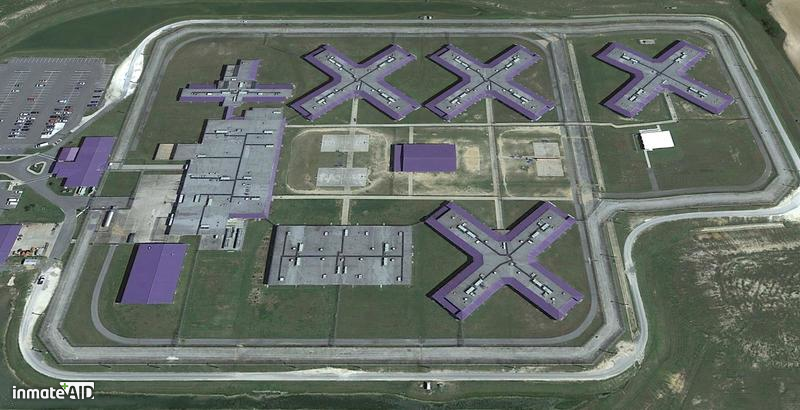
Satellite View of FDC-Graceville Correctional Facility
Search Arrest Records

If your loved one is at Graceville CF, InmateAid can help you stay connected. Call the facility directly at 850-263-5500 with any immediate questions.

Located at 5168 Ezell Rd in Graceville, FL, Graceville CF carefully assigns inmates based on their custody level, considering factors like criminal history. Graceville CF offers diverse educational and vocational programs aimed at equipping offenders for successful reintegration into society and reducing recidivism. Through these initiatives, inmates gain skills and confidence, fostering personal growth and resilience.

When someone you care about ends up in a state prison, it can be tough to navigate the ins and outs of the system. From figuring out how to stay in touch to understanding what you can do to make their time easier, it can feel overwhelming. That's where this webpage comes in handy. It's here to help you get the lowdown on FDC-Graceville Correctional Facility so you can stay connected and support your loved one during their time inside.

Communication is important, the prison offers a phone program for outbound calls only, with inmates unable to receive incoming calls. Accepting collect calls can be expensive, sometimes exceeding $10 per call. Click here for discounts on inmate calls, especially if the communication with your inmate is frequent. It's important to remember that all phone calls are recorded, and discussing sensitive legal matters over these lines is discouraged.

While incarcerated, reading is often the best use of time. Please note that books and magazines, puzzles, and word searches ordered for inmates must come directly from the publisher. This policy ensures that the items are new, untampered, and comply with the facility's regulations. Prisons and jails enforce this rule to prevent the introduction of contraband or prohibited materials. By restricting orders to publishers, the facility can better maintain security and control over the content entering the institution. Any books or magazines not received directly from the publisher will be rejected and not delivered to the inmate. You may, however, send letters and selfies to inmates with this easy-to-use app, packages starting at only $8.00.

The Graceville Correctional Facility, located in Jackson County, is a private state prison for men. Since its establishment in 2007, it has been operated by various private companies, but now specifically by the Florida Department of Corrections (FDC).

With a maximum capacity of 1,884 prisoners at various security levels, the facility offers a range of programs and services aimed at rehabilitation and personal development for its incarcerated population.

Academic programs at Graceville Correctional Facility include adult basic education, General Educational Development (GED) courses, and mandatory literacy programs. In addition, inmates have access to vocational programs such as the Auburn K-9 Program, barber training, commercial driver’s license courses, landscape management, and technical support services.

Chaplaincy services play a significant role in providing spiritual guidance and support to inmates, offering services like baptism, Bible studies, meditation, mentoring, and various worship services. The facility also hosts religious education sessions, special events, and personal growth programs to foster positive change among inmates.

Faith-based and betterment programs aim to address various aspects of personal development, including conflict resolution, credit and debt management, employability skills, family relations, grief recovery, parenting, and re-entry and relapse prevention.

Substance abuse programs, including intensive outpatient services, are available to inmates struggling with addiction issues. Institutional betterment programs like Compass 100 and Thinking 4 Change (T4C) focus on promoting positive behavioral changes and personal growth.

Overall, the Graceville Correctional Facility is dedicated to providing comprehensive support and resources to its inmates, with the goal of facilitating rehabilitation, reducing recidivism, and promoting successful reintegration into society. Through its diverse range of programs and services, the facility strives to empower inmates to lead productive and fulfilling lives both during and after their incarceration.
Inmate Locator

Finding a State Inmate at FDC-Graceville Correctional Facility

If you're trying to locate someone in Florida state custody at FDC-Graceville Correctional Facility in Graceville, the Florida Department of Corrections maintains a state-level inmate locator that covers all DOC facilities. Every state runs its own system, so the search experience differs significantly from federal or county-level locators. If the DOC locator does not return the person you're looking for, call FDC-Graceville Correctional Facility directly at 850-263-5500 to confirm current custody status.

Using the State DOC Inmate Locator

The Florida DOC inmate locator searches by full name, DOC inmate number, or both. The state inmate number is assigned at intake and stays with the inmate across transfers between facilities within the state, but it does not transfer if the inmate moves to another state or to federal custody. State locators typically return the inmate's current housing facility, custody level, projected release date, and parole eligibility, though specific data fields vary by state.

When the Inmate Doesn't Appear in the DOC Locator

A state inmate may be missing from the DOC locator for several reasons. Newly sentenced inmates often spend weeks at a county jail awaiting transfer to the state reception center, during which they are not yet in the DOC system. Inmates in transit between facilities may be temporarily missing. Some states delay public records by 24 to 72 hours after intake. The InmateAid inmate search can help locate someone during this gap period because it pulls from county jail rosters as well as state systems.

State Inmate Numbers and Out-of-State Transfers

If the inmate was recently transferred from another state under an interstate compact, or moved to federal custody on writ, the Florida DOC locator may show them as "in transit" or remove the record entirely. To track inmates across state or federal jurisdictional moves, call 850-263-5500 for current location and case status.

Once You've Located the Inmate

When you confirm the person is at FDC-Graceville Correctional Facility , set up an inmate phone account with the facility's contracted provider and arrange any money transfer or commissary funding needed. For phone discount plans, money transfer, and mail services that work with Florida state facilities, see InmateAid's inmate services and call 850-263-5500.

To confirm current custody status, recent transfers, or release information at FDC-Graceville Correctional Facility , call 850-263-5500.

Visitation Information

FDC Visitation Information

Visiting Hours 9:00 am - 3:00 pm

Frequently Asked Questions About FDC-Graceville Correctional Facility

  1. What is a state prison?
      A state prison is a correctional facility operated by the Florida Department of Corrections, housing individuals convicted of state crimes. Inmates typically serve sentences longer than one year. State prisons have different security levels and provide rehabilitation, education, and work programs.

  2. How do state prisons differ from federal prisons?
      State prisons hold offenders convicted of crimes under state laws, while federal prisons house those convicted of federal offenses. State prisons are managed by state DOCs and vary in policies, security levels, and resources. Federal prisons, run by the Bureau of Prisons (BOP), often have more structured programs and uniform policies nationwide.

  3. What are the different security levels in state prisons?
      State prisons are classified as minimum, medium, or maximum security, based on inmate risk assessments. Minimum-security facilities house non-violent offenders with lower risks. Medium-security prisons have higher security protocols and structured daily routines. Maximum-security prisons, or supermax facilities, house the most dangerous offenders with strict confinement measures.

  4. How are inmates classified in state prisons?
      Classification is based on criminal history, sentence length, behavior, and medical or mental health needs. The DOC assesses inmates upon intake to determine their housing assignment, work eligibility, and rehabilitative program access. Inmates may be reclassified based on behavior or security concerns.

  5. What types of programs are offered in state prisons?
      State prisons offer GED courses, vocational training, substance abuse counseling, mental health treatment, religious programs, and work release opportunities. Many prisons collaborate with colleges and trade schools to provide certificates in fields such as welding, plumbing, and computer technology.

  6. Can inmates earn early release from state prisons?
      Some inmates qualify for parole, good behavior credits, or sentence reduction programs. State laws determine eligibility based on offense type, institutional behavior, and participation in rehabilitation programs. Some states offer compassionate release for elderly or terminally ill inmates.

  7. How do state prisons handle medical care for inmates?
      Inmates receive basic medical, dental, and mental health care inside the facility. For specialized care, they may be transported to hospitals under security escort. State DOCs often contract with private healthcare providers such as Corizon Health, Wellpath, and Centurion Health.

  8. Are state prison inmates allowed to work?
      Yes, inmates can work within the prison (kitchen, janitorial, maintenance) or in prison industries (manufacturing, farming, sewing, furniture-making). Some states allow inmates to participate in work-release programs, where they work outside the prison and return at night. Inmate workers may earn small wages (often $0.10 to $2.00 per hour) depending on the job.

  9. What are the visitation rules for state prisons?
      Visitation varies by facility but generally requires pre-approval of visitors, background checks, dress codes, and scheduled visiting hours. Some prisons allow contact visits (where inmates and visitors can hug or hold hands), while others allow only non-contact visits (separated by glass). Video visitation services are provided by companies like GTL (ViaPath), Securus, and IC Solutions.

  10. Can inmates receive mail and packages?
      Yes, inmates can receive letters, photos, and books, but all mail is screened for contraband. Some state prisons require mail to be sent through third-party processors, which convert letters into digital copies. Packages with clothing or hygiene items must often be ordered through approved vendors like Access Securepak, InmateCanteen, JailCanteeniCareGifts, MyCarePack or Union Supply Group.

  11. How do phone calls work in state prisons?
      Inmates can make outgoing calls to approved numbers through prison phone services, but cannot receive calls. Calls are typically monitored and recorded. Services like GTL (ViaPath), Securus, and IC Solutions provide prepaid accounts for families to deposit funds for calls. Some states offer tablet-based calls with limited messaging services.

  12. What are the disciplinary rules in state prisons?
      Inmates must follow prison regulations regarding behavior, movement, and interactions with staff and other inmates. Infractions like fighting, possession of contraband, or rule violations can result in loss of privileges, solitary confinement, or additional time added to their sentence.

  13. Do state prisons offer religious services?
      Yes, state prisons have chaplains and religious volunteers who provide services for various faiths. Many facilities offer Bible study groups, prayer meetings, and religious dietary accommodations for inmates who follow specific religious beliefs.

  14. How does parole work in state prisons?
      Inmates eligible for parole must appear before a parole board, which reviews their behavior, program participation, and risk to society. If granted parole, inmates serve the remainder of their sentence under supervision in the community, following specific rules such as curfews and employment requirements.

  15. Can inmates transfer between state prisons?
      Yes, inmates may be transferred for medical needs, security risks, disciplinary actions, or administrative reasons. Some may request transfers to be closer to family, but approvals depend on facility capacity and eligibility requirements.

  16. What happens when an inmate finishes their sentence?
      Inmates released from state prison may receive reentry services, such as job training, housing assistance, and substance abuse counseling. Some states require certain inmates to remain under supervision (such as parole or probation) after release.

  17. Are state prisons overcrowded?
      Many states struggle with overcrowding due to high incarceration rates. Solutions include alternative sentencing programs, early release initiatives, and building new facilities to accommodate growing populations.

  18. How can family members send money to an inmate?
      Families can deposit funds into an inmate’s commissary account through services like JPay, ConnectNetwork, or  Access Corrections. Money is used for purchasing snacks, hygiene items, and phone calls. Some states have limits on how much an inmate can receive per month.

  19. Do state prisons offer educational opportunities?
      Yes, many prisons provide GED classes, college courses, and vocational training programs. Some offer Pell Grants for inmates to take college-level courses. Popular vocational programs include auto repair, HVAC, and culinary arts.

  20. Can inmates be placed in protective custody?
      Yes, inmates who are at risk of harm due to gang conflicts, former law enforcement ties, or other safety concerns can be placed in protective custody (PC). These inmates are housed separately from the general population, often with limited movement and privileges for their safety.

Ask The Inmate

Connect directly with former inmates and get your questions answered for free. Gain valuable insights from individuals with firsthand experience in the federal prison system, state and county jails, and GEO and CoreCivic-run private prisons. Whether you're seeking advice, clarification, or just curious about life behind bars, this unique opportunity allows you to ask questions or explore answers to previous inquiries from the InmateAid community. Engage in meaningful discussions and get informed perspectives from those who truly understand the system.